Sodium, Potassium, Magnesium: The Big Three, One by One
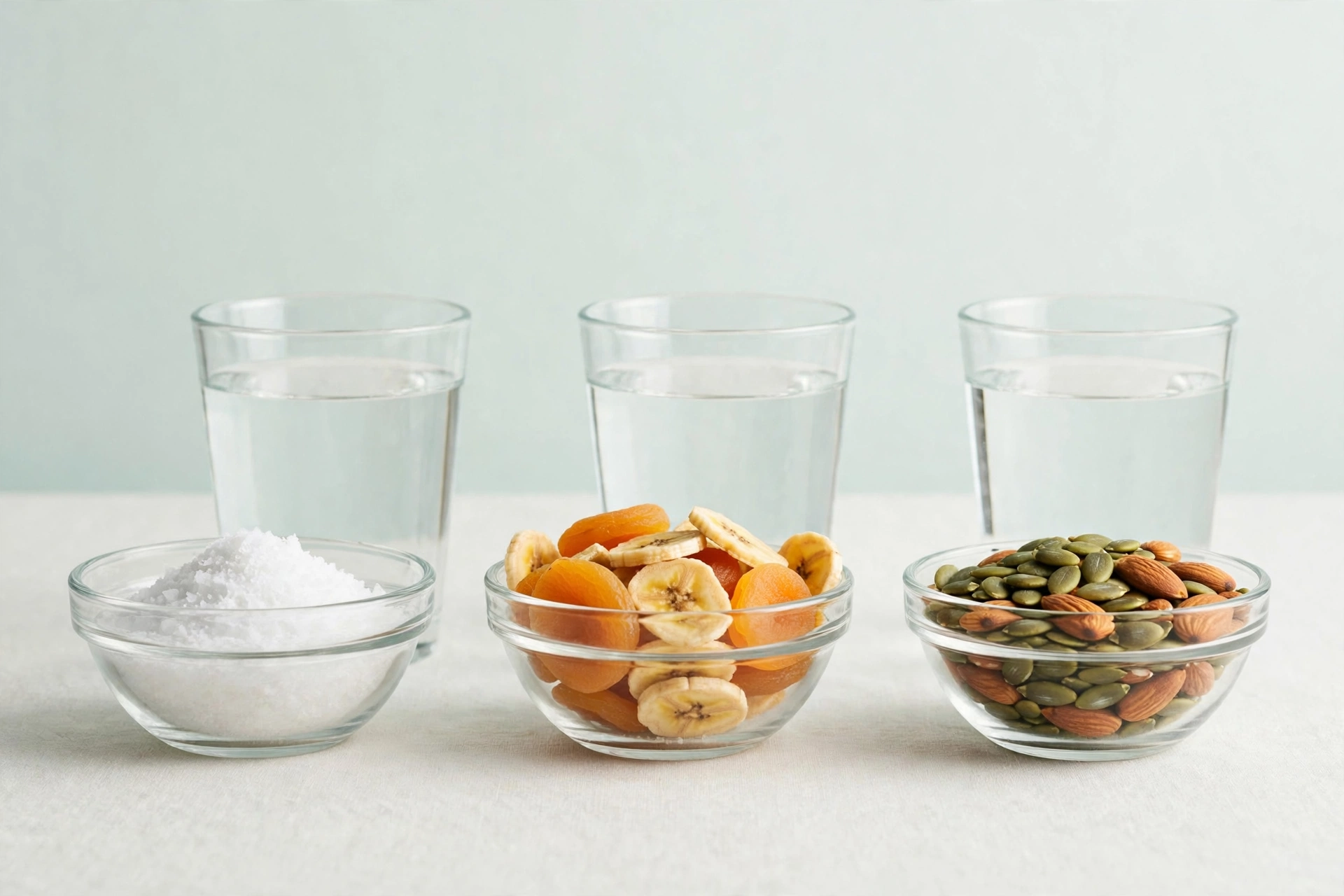
Sodium — the fluid keeper
Sodium is the main electrolyte in blood and the one you lose most in sweat. It decides how much fluid you hold on to. Too little during prolonged sweating and you cramp, fade and feel awful; too much as a daily habit, when you don't need it — especially with blood-pressure or kidney issues — is its own problem. This is why a 1,000 mg stick can be right on a roof in August and wrong at a desk in January.
Potassium — the inside partner
Potassium works mainly inside cells, balancing sodium, and supports muscle and nerve function. Many big-brand formulas under-dose it — 200 mg against 1,000 mg of sodium — while others now lead with 400 mg or more. Respect the label limits: extra potassium is a genuine safety issue for people with kidney problems or on certain common medications, so 'more' is not automatically 'better'.
Magnesium — the one most often missing
Magnesium supports muscle relaxation, nerve function and normal sleep patterns, and it is the electrolyte big brands most often skimp on — cheap forms, token amounts, or none. When you compare, look for 100 mg or more in a glycinate or malate form if magnesium is part of why you're buying. Note the evidence is modest, not magical: evening magnesium is a reasonable ritual, not a treatment for insomnia.